
“And the narcissus, which earth at the bidding of Zeus had produced to
– The Homeric Hymns ( Hymn to Demeter)
Please the Receiver of Many, a snare for the flower-faced maiden,
Glistening miracle, marvel and wonder to all who behold it,
Whether the gods, who are deathless, or men, who are born but to perish.
For from its root it thrust upward a glorious, manifold blossom,
And it exuded a fragrance so sweet that broad heaven above and
All the earth laughed with pleasure, as did the salt wave of the sea.”
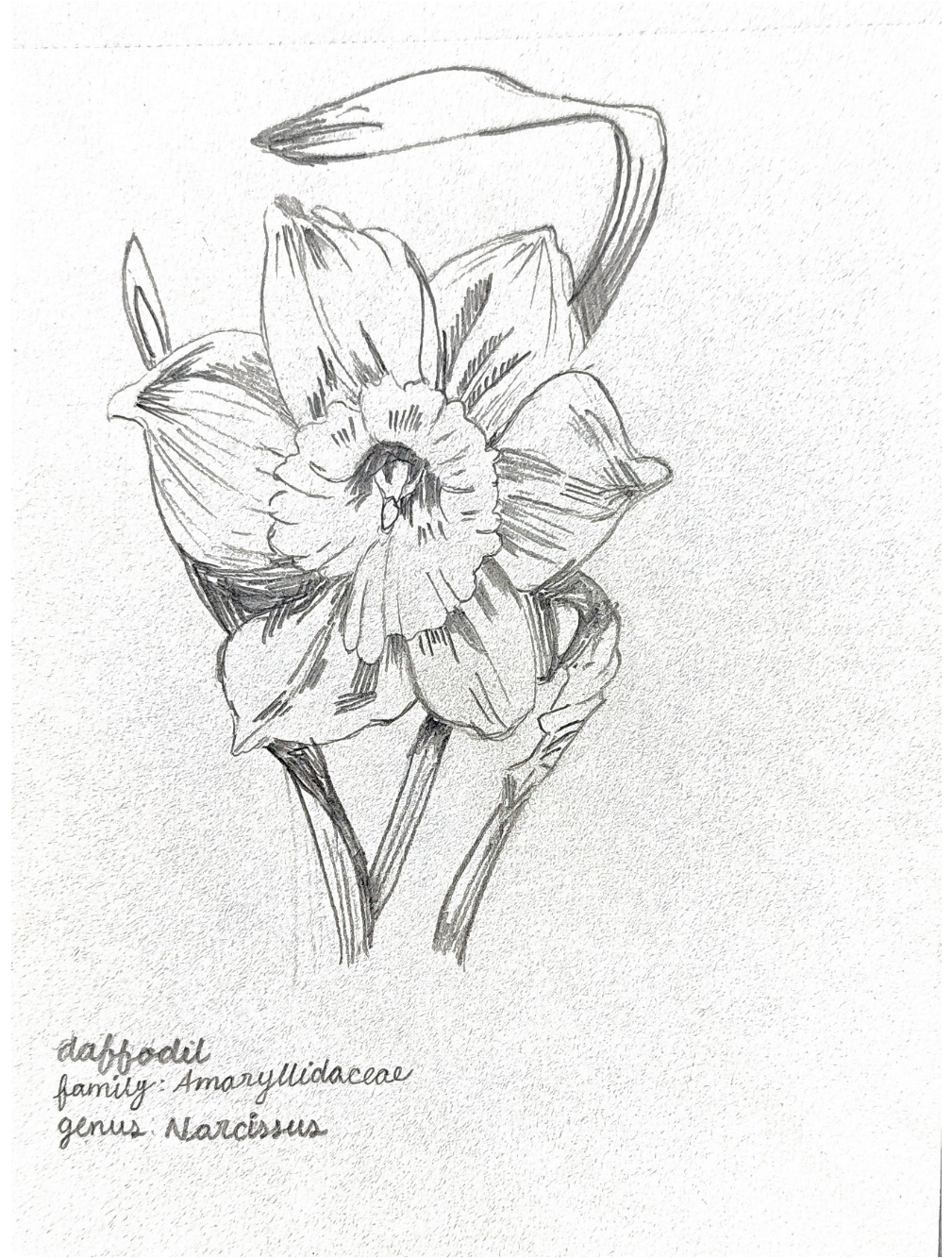
The Narcissus, commonly known as the daffodil, first drew me in because of its intriguing name and fascinating backstory. It’s famously tied to the Greek myth of the young man Narcissus, who took self-love to an extreme. One day, he gazed at his reflection in a river and was so captivated by his own beauty that he stayed there until the gods eventually transformed him into a flower (as was often the case in Greek mythology—see: Hyacinthus, Crocus). It is also mentioned in the myth of Persephone and Hades, where Hades lures the daughter of the spring goddess using this flower.
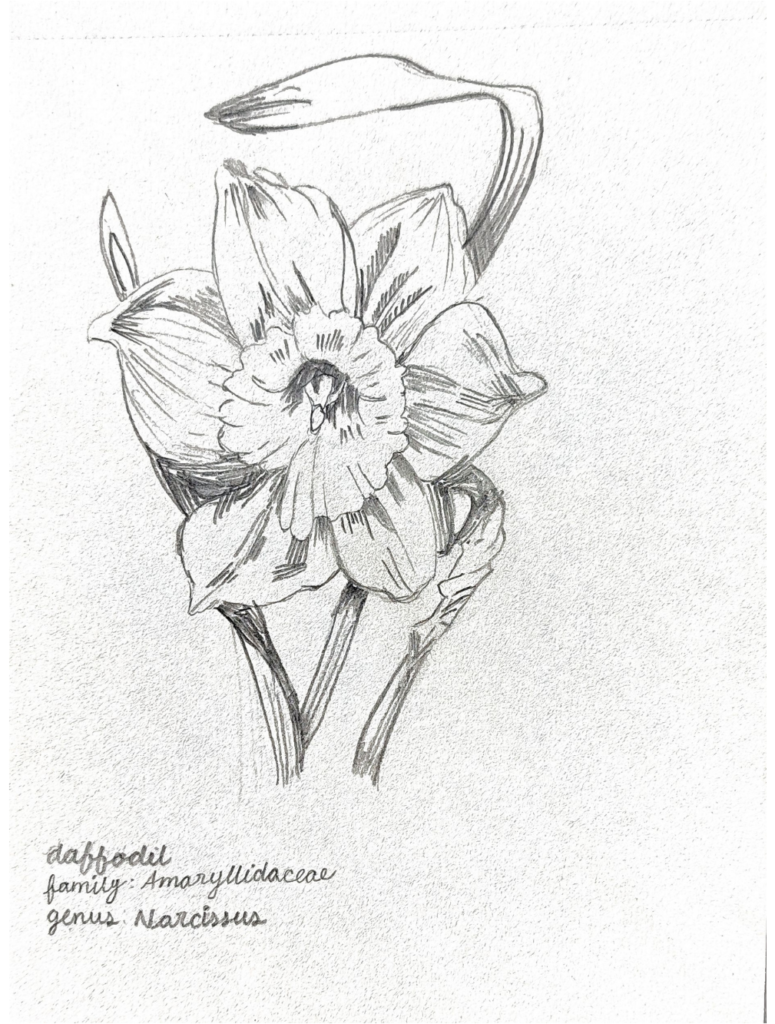
Botanically, Narcissus is a genus of about 50 species of spring-flowering, perennial plants. Its flowers feature six petal-like tepals topped by a central crown, which can be trumpet- or cup-shaped(Britannica).
Roots
The name Narcissus comes from the Greek word narke, meaning “numbness,” referring to the plant’s sedative effects. This is the same root as the word “narcotic.” However, don’t confuse this with the origin of “narcissism” or “narcissist,” which stems from the myth of Narcissus and describes an exaggerated sense of self-importance, “a pattern of grandiosity, need for admiration, and lack of empathy” (Weinburg et. al). Or more simply, narcissistic individuals show a high, and often false, sense of self-importance (they may do things like making a website about themselves… seriously, who does that?).
Uses
Aside from sitting pretty in countless spring gardens and bouquets, the Narcissus genus of plants actually has many uses. Not surprisingly, one of them is in the cosmetics industry. Narcissus extract is used in cosmetics such as skin, hair, or body care products for its fragrance (Deascal).
Medicine
This flower isn’t just for ornamental uses. Historically, Narcissus was valued for its medicinal properties. From ancient remedies to modern Alzheimer’s treatments, the Narcissus is as much a subject of science as it is of story.
Ancient Uses
- Extracts from the Narcissus species were historically used by Hippocrates, also known as the father of medicine, for cancer treatment (Kornienko et. al.).
- Narcissus oil was used for cancer management in Chinese, North African, Central American and Arabian medicine throughout history (Kornienko et. al.).
Modern Cancer Research
- Modern research confirms these plants contain alkaloids with cytotoxic, antibacterial, antifungal, and enzyme inhibitory properties, meaning they can inhibit cancer cell growth (Boshra et. al.)
- These compounds interfere with cell division and have shown promise against various tumor types in experimental studies (Kornienko et. al.).
Galantamine for Alzheimer’s Disease
- Narcissus flowers are also a source of galantamine, an alkaloid used in drugs for Alzheimer’s treatment.
- Galantamine works by inhibiting acetylcholinesterase, boosting acetylcholine levels in the brain, which helps improve memory and cognitive function (SCI)
- It is interesting to see the striking contrast to the myth: from the young Narcissus forgetting the world while admiring his own beauty, to the plant that now helps people remember.